Key takeaways
- For most people, the best foot scrubber for calluses is a manual tool with a textured surface that lifts thick buildup while you control the pressure.
- A little callus is normal protection, so lift the hardened excess instead of removing every bit.
- Soak for five to 10 minutes, use light to moderate pressure, and stop once skin feels smooth or turns pink.
- Once or twice a week is plenty for most people, and moisturizing right after is the step that keeps the results.
- Skip callus shavers and blades at home, and see a dermatologist or podiatrist for painful cracks, bleeding, or diabetes.
Rough heels can make the nicest pedicure look unfinished fast. If you are hunting for the best foot scrubber for calluses, the real question is which one removes thick, stubborn buildup without leaving your feet raw, over-filed, or weirdly worse a week later, not which tool looks the fanciest.
Calluses are not random. They show up where your feet deal with the most friction and pressure, usually on the heels, balls of the feet, and sides of the big toe. A good scrubber helps lift that hardened dead skin so feet feel smoother, look cleaner, and absorb moisturizing treatments better. A bad one can go too aggressive, create micro-tears, or tempt you into removing more skin than you should.
What makes the best foot scrubber for calluses?
The best tool removes buildup well, is easy to control, and is realistic for your routine. That last part matters more than people think. If a scrubber works beautifully but feels messy, harsh, or time-consuming, it usually ends up forgotten under the sink.
There is no single best tool for every heel. The right match depends on whether you are dealing with light dryness, stubborn buildup, or thick calluses that catch on your socks.
For most people, the sweet spot is a manual foot scrubber with a textured exfoliating surface that can handle thick dry skin while still giving you control over pressure. This is especially true if your calluses are moderate to heavy and you want that immediate, satisfying payoff. Think visible skin removal, smoother heels after one session, and a finish that feels polished rather than shredded.
Electric foot files can be helpful, but they are not automatically better. They are convenient and often feel less physically demanding, yet they can struggle with very thick buildup or encourage repeated passes in one area. Traditional metal rasps remove a lot quickly, but they can be too harsh for people who get carried away. Glass and fine-grit files are gentler and great for maintenance, though they may not be enough for deeply cracked, dense calluses.
Is it good to remove dead skin from your feet?
Yes, as long as you remove the excess and leave some protection behind. Clearing hardened buildup makes feet more comfortable, helps moisturizer reach the skin underneath, and keeps rough patches from thickening into painful ones.
Left alone, dry dead skin on the heels can crack. Cracked heels can get deep enough to bleed and make walking sore, and thick calluses on pressure points can start to hurt, especially in shoes that rub. Smoother feet also feel better in socks and sandals, and lotion absorbs more evenly.
The catch is that a callus is your skin's built-in armor. Repeated friction and pressure tell the outer layer to thicken up for protection, so a little callus is normal. The benefits of a foot scrub come from lifting the dull, hardened excess while leaving that healthy layer in place. For the bigger picture across face and body, here is why exfoliation matters.
The main types of foot scrubbers
If you want the best foot scrubber for calluses, it helps to know what category you are shopping in. Not all exfoliation tools are built for the same level of roughness.
Manual foot files and scrubbers
These are usually the best all-around option. They give strong exfoliation, clear pressure control, and immediate visible results. A well-made manual scrubber can handle dry, flaky buildup and thicker heel calluses without the unpredictability of blades.
They also fit the at-home ritual people actually keep up with. A few minutes after a shower, a focused scrub, then a rich foot cream or balm. That is the kind of routine that turns rough feet around.
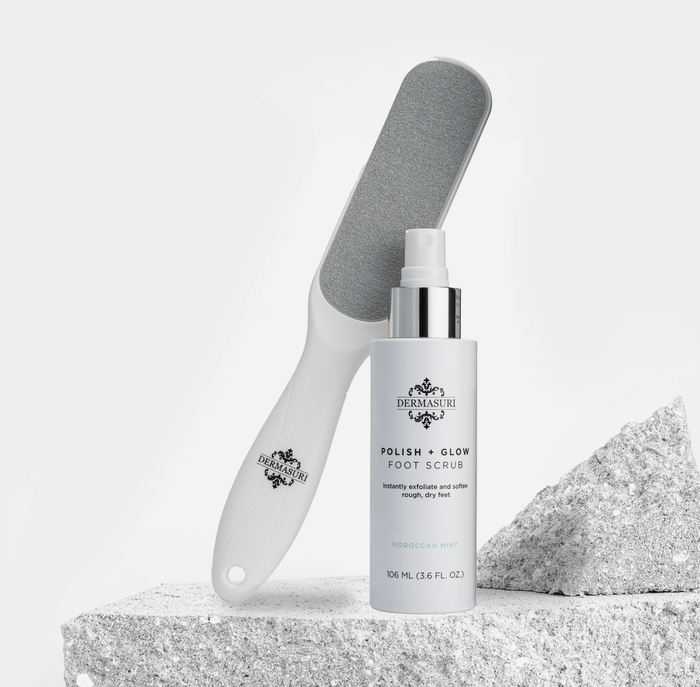
Our Dermasuri Deep Exfoliating Foot Scrub Set is built this way. It pairs a softening spray with a two-sided stainless steel file: the coarse grit takes down the tough layers and the fine grit buffs away the rest. The 4-1 in 1 Exfoliating Foot Scrub Kit puts four surfaces in one set, with a dry brush, a pumice stone, a stainless steel foot file, and a sandpaper side for targeted smoothing.
Electric foot files
These use spinning roller heads to buff away dead skin. They are easy to use and can feel a little more polished and gadgety, which some people love. If your calluses are light to medium, an electric file may be enough.
The trade-off is speed versus depth. They can be excellent for upkeep, but really thick calluses often need more power or more patience than an electric file delivers. If you expect one quick swipe to erase months of buildup, you may be disappointed.
If you use an electric foot scrubber, keep the head moving, use minimal pressure, and stop once the area feels smooth. Electric tools can remove more skin than you realize, particularly on dry feet.
Metal rasps
These are the heavy hitters. They remove thick skin fast and can work very well on hard heels. But fast removal comes with a catch: it is easier to overdo it.
If you have sensitive skin, diabetes, poor circulation, or cracks that are already tender, this category may be too aggressive. Even for healthy feet, technique matters. More pressure is not better. Better is better.
Pumice stones and gentle buffers
These are great for maintenance and softer exfoliation. They are usually not the best answer for serious calluses on their own, but they shine between deeper exfoliation sessions. If your feet are mostly smooth with just a little seasonal roughness, this may be all you need.
Pumice performs best on wet skin. Use it at the end of a shower or after a soak, move the stone in small circles over rough areas, then rinse it well and let it dry completely. If you are deciding between the two classics, our guide to foot file vs pumice stone compares them side by side.
Exfoliating mitts and scrub gloves
For everyday roughness and surface dryness, a textured exfoliating mitt is the easy choice. Used with warm water and gentle pressure, it buffs away loose, dull skin across the whole foot instead of just the heel. For thick heel calluses, pair it with a file and use the mitt to keep feet smooth between file sessions.
Callus shavers and blades
Skip these for at-home use. Blade-style callus removers can cut through hard skin, but they can also cut healthy skin, and a small slip can lead to bleeding, pain, and a higher risk of infection. A file, pumice stone, or mitt gets you smoother feet without that risk. If you have a very thick, painful callus, a podiatrist can assess it safely.
How to choose the right scrubber for your feet
Start with the thickness of your calluses. If your heels catch on socks, look pale or yellow, or have that hard shell-like feel, you need a scrubber with enough grit to make a visible difference. If your feet are just a little rough around sandal season, a gentler option is smarter.
Then think about when you will use it. Some scrubbers work best on softened skin after a shower or soak. Others are better on dry skin, where dead skin lifts more dramatically and you can see exactly what you are removing. This depends on the material and design, so the best tool is partly about matching the scrubber to your preferred method.
Handle design matters too. A slippery, flimsy tool is annoying at best and unsafe at worst. Look for something easy to grip, easy to rinse, and sturdy enough to hold up over time. If the exfoliating surface wears down after a handful of uses, it is not the best foot scrubber for calluses, no matter how pretty the packaging is.
Here is how the main types of foot scrubber compare.
| Tool | Best for | Wet or dry | Watch out for |
|---|---|---|---|
| Manual foot file or scrubber | Moderate to heavy calluses on heels and the balls of the feet | Depends on the tool. Our Deep Exfoliating Foot Scrub Set is made for damp, softened skin | Too much pressure in one spot |
| Electric foot file | Light to medium buildup and upkeep | Check the instructions; some are made for dry use | Taking off more skin than you realize |
| Metal rasp | Very thick, hard heels on healthy feet | Depends on the tool | Easy to overdo; may be too aggressive with sensitive skin, diabetes, or poor circulation |
| Pumice stone or gentle buffer | Maintenance between deeper sessions | Wet | Usually not enough on its own for serious calluses |
| Exfoliating mitt | All-over smoothing and surface dryness | Wet | Not built for dense heel calluses |
| Callus shaver or blade | Not recommended at home | Not applicable | Cuts, bleeding, and infection risk |
What most people get wrong about callus removal
The biggest mistake is treating calluses like something you should attack all at once. That can leave feet overly sensitive and trigger a cycle where skin responds by building up again. The goal is smoother, healthier-looking feet, not removing every bit of protection your body created.
Another common mistake is skipping prep and aftercare. Exfoliation works better when feet are clean and skin is ready for it. And once you remove that dull, rough layer, you need moisture. Otherwise, the fresh skin underneath dries out and the roughness comes back fast.
There is also the temptation to use facial or body scrubs on thick heel calluses and expect magic. Scrubs can support softness, but dense foot calluses usually need a dedicated physical exfoliation tool first. After that, creams, balms, and maintenance exfoliation can keep results going.
The words trip people up, too. A foot scrub usually means a grainy product, cream, or spray, while a foot scrubber is the tool itself. For calluses, the scrub is the supporting step that softens skin and smooths leftover roughness, and the scrubber does the heavy lifting.
Using a tool on the wrong skin is another slip. A file made for damp, softened skin can feel harsh and uneven on dry feet. Then there are shoes. Open-back sandals, poorly fitted flats, and long stretches barefoot on hard floors can rub the same spots all week and undo a great foot session.
Shop the story
Shop all Deep Exfoliating Foot Scrub Set (includes file)
 4-1 in 1 Exfoliating Foot Scrub Kit
 Ultimate Footcare (4-1 file + Spray/file set)
How to use a foot scrubber for better results
A good foot scrubber does a lot, but technique is where the real difference happens. Start with clean feet. If your tool is designed for use after bathing, let skin soften in the shower or with a short soak. If it performs better on dry skin, make sure feet are fully dry before you begin.
A short soak means about five to 10 minutes in comfortably warm water, the range the American Academy of Dermatology suggests for corns and calluses. Longer is not better. Very long soaks can leave skin waterlogged and harder to exfoliate evenly.
Use light to moderate pressure and focus on the thickest areas first. Short, controlled passes work better than aggressive scrubbing. You want to gradually lift away dead skin, not create heat or irritation. Pay attention to how your feet look and feel as you go. If skin turns pink or tender, stop.
Once you are done, rinse if needed and apply a rich moisturizer right away. For best results, seal in hydration with socks for a little while after. That one extra step can make your heels feel dramatically softer by the next morning.
For heavy buildup, expect improvement in stages. One session can make a big visual difference, but deeply callused feet often need regular maintenance instead of one marathon scrub.
A simple routine for a damp-skin tool looks like this:
- Soak or shower for five to 10 minutes, then pat your feet so they are not dripping.
- File the thickest areas first: the heels, the outer edge of the foot, and the ball of the foot.
- Run a hand across your heel every few passes, and stop once it feels smooth instead of chasing perfectly flawless.
- Rinse away the loosened skin and towel-dry your feet.
- Apply a rich foot cream or balm while skin is still slightly warm, and pull on cotton socks if you want an overnight boost.
With the Deep Exfoliating Foot Scrub Set, the spray goes on between the soak and the file. Wet or soak your feet, pat them dry-ish, spray the bottoms from about 4 inches away, and let the formula sit for 3 minutes. File when your feet feel tacky, not soaked. For extra softness, leave the formula on or finish with your favorite foot lotion.
Using a foot scrubber in an at-home pedicure
In an at-home pedicure for calluses, the scrubber step comes after the soak and before moisturizer, so the callus work happens on softened skin. Treat it as one focused session followed by maintenance rather than a single night to fix months of buildup. Smooth heels make the rest of the pedicure look more finished, and self-tanner goes on with fewer patchy spots. Our foot exfoliation guide walks through prepping feet before a pedicure.
Caring for your foot scrubber
Rinse your scrubber after every use, clear away trapped skin, and let it dry fully before you put it away. A tool left damp in the shower does not stay fresh. Replace it when the surface looks worn or loses its grit. For the file in our Deep Exfoliating Foot Scrub Set, that means a new one every 4 to 6 months.
How often should you use a foot scrubber?
For most people, once or twice a week is plenty. That is the guidance for our Deep Exfoliating Foot Scrub Set, and you can adjust it based on how dry or callused your feet are.
If your heels are very thick or cracked, plan a few gentle sessions over one to three weeks instead of one aggressive treatment. If your feet are sensitive or turn pink easily, start with once a week and see how they respond. Daily heavy filing is almost always too much.
Your schedule also depends on what your feet go through. Long shifts on your feet, race training, or a summer in open-back sandals may call for maintenance twice a week. Moisturizing, though, can be daily, and it is often the step that keeps the results. For more on timing, see how often to exfoliate your feet.
Dry vs. wet exfoliation: which is better?
It depends on the tool and your skin. Dry exfoliation often gives that wow moment because dead skin sheds more visibly. It can also be easier to target exactly where the buildup is thickest. For people who want instant payoff, this method can be very satisfying.
Wet exfoliation is usually gentler and can feel more comfortable, especially if your skin is sensitive or your calluses are not extreme. Softened skin is easier to work with, but sometimes it can be harder to tell when you have done enough.
If you tend to over-exfoliate, wet use may help you stay more controlled. If your heels are seriously rough and your tool is designed for dry use, that may get you better results faster. This is one of those it-depends moments where the best choice is the one that balances results and control.
Our own tools show both sides. The Deep Exfoliating Foot Scrub Set is made for damp, softened skin after a soak; on dry feet it may not work as well and can raise the risk of irritation. The 4-1 in 1 Exfoliating Foot Scrub Kit's directions start on dry feet with the dry brush. Pumice stones and exfoliating mitts work best wet, and with an electric file, check the instructions, since some are designed for dry use.
What results to expect from a foot scrubber
Expect smoother, softer heels right after a good session, with the full payoff the next morning. Light roughness can change after one session. Thick, older calluses usually need a few gentle sessions over one to three weeks.
Right after exfoliating, feet should feel smoother and look fresher, and you may see little rolls of softened dead skin come away. What you should not see is bleeding, raw spots, deep redness, or burning. Those mean stop and let your skin recover.
The next morning is often when you notice it most. Moisturizer has had time to sink in, and your heels feel smoother when they hit the floor. If they still feel rough, do not go straight back in. Moisturize and plan another gentle session a few days later.
After a few weeks of regular use, the rough layer does not get the chance to build back as thick, and the routine turns into easy maintenance. Some calluses will return while the pressure that caused them is still there, which is why shoe fit matters as much as the tool. If you have a beach day, event, or self-tan session coming up, exfoliate a day or two ahead so skin has time to settle.
When a foot scrubber is not enough
A scrubber can do a lot for cosmetic roughness, but some foot issues need extra care. If you have deep painful cracks, bleeding, signs of infection, or medical conditions that affect circulation or sensation, DIY exfoliation is not the move. Safety comes first.
This matters most with diabetes. The American Academy of Dermatology notes that with diabetes, a corn or callus can break down and open, which may lead to a serious infection, and that a dermatologist or podiatrist can treat it.
Not every hard spot is a callus, either. Most calluses are broad, dry, and fairly painless. A corn is usually smaller and more concentrated and can hurt when pressed, and a plantar wart may have tiny dark dots or break up the natural lines of your skin. If a spot is painful, changing color, or keeps returning in exactly the same place, get it checked before you file it.
And if calluses keep coming back fast, look at the cause. Tight shoes, high heels, lots of walking or standing, and dry indoor air can all keep the cycle going. The best results usually come from a mix of exfoliation, moisturizing, and reducing friction where you can. We break down what causes rough heel buildup, and if your heels have shallow cracks, our guide to softening cracked heels is a better first step than a coarse file.
So what is the best choice?
For most people, the best foot scrubber for calluses is a high-performance manual exfoliating tool that removes dead skin well, feels easy to control, and fits into a simple weekly routine. It should be strong enough to handle real heel buildup, but not so harsh that your feet feel punished after using it.
That is the sweet spot: visible change with enough control to keep skin smooth, soft, and happy. When you find a tool that gives you that OMG, is that my skin? moment, the trick is to use it consistently rather than harder, then follow with moisture so your feet stay sandal-ready instead of swinging back to rough again.
Our Deep Exfoliating Foot Scrub Set is made around that idea, with a softening spray and a two-grit stainless steel file in one kit. You can see it next to the rest of our Dermasuri foot care tools.
You do not need perfect feet. You need a ritual that works well enough that you actually want to keep doing it.