Key takeaways
- Smoothing rough heels comes down to four steps: soften, exfoliate, moisturize, then maintain.
- Soak in warm water for about 5 to 10 minutes, then exfoliate damp, softened skin with light to medium pressure.
- Apply a rich foot cream or balm right after exfoliating, while the skin is still slightly damp.
- For many people, exfoliating heels one to two times a week is enough, depending on how quickly buildup returns.
- To soften heels overnight, coat them in a thick cream or balm and sleep in clean cotton socks.
Your heels can ruin the whole soft-skin fantasy in about two seconds. You step into sandals, catch a rough patch on your sheets, or notice that chalky, thick skin building up again right after a pedicure. If that sounds familiar, this guide to smoothing rough heels is for you. And yes, you can get visible results at home without turning it into a full-time job.
Rough heels usually look stubborn because they are stubborn. The skin on your feet is naturally thicker than the skin on most other parts of your body, and it takes a lot more pressure every single day. Add open-back shoes, hot showers, dry air, long hours standing, or simply skipping regular foot care, and that rough texture starts stacking up fast. What begins as dryness can turn into hard buildup, cracked edges, and that annoying sandpaper feel.
Why heels get rough in the first place
Most rough heels are a mix of friction, dryness, and neglected buildup. Every step creates pressure, especially around the heel rim, where skin tends to thicken as a protective response. That thickening is your body doing its job, but it is not exactly the smooth, polished result most people want.
Moisture loss makes the problem more obvious. When heel skin gets dehydrated, it looks dull, feels rigid, and becomes more likely to split. If you live in sandals, walk barefoot at home, or spend a lot of time in dry indoor air, your feet are constantly losing the softness battle.
There is also a timing issue. Many people wait until their heels feel rough before doing anything, then go way too hard in one session. That can leave feet feeling temporarily smoother but also irritated, over-filed, or quick to rebound. Smoother heels usually come from consistency, not one aggressive scrub-down.
Cracks are what happens when that thick, dry skin runs out of give. Instead of bending with each step, it splits, usually along the outer rim of the heel first. Hot showers, low humidity, poorly fitting shoes, and going barefoot all make it more likely. If you want the full picture of what drives rough heel buildup and why it keeps coming back, that has its own guide.
A guide to smoothing rough heels at home
The sweet spot is simple: soften, exfoliate, moisturize, then maintain. If you skip one of those steps, results tend to be weaker or shorter-lived.
Step 1: Start with softened skin
Trying to exfoliate very dry, rigid heels can feel like you are getting nowhere. Start after a shower, bath, or foot soak when the thickened skin is more pliable. You do not need to soak forever. About 5 to 10 minutes in warm water is usually enough to loosen dead skin and make exfoliation easier, in line with the American Academy of Dermatology's advice on soaking calluses.
Warm water works well, but very hot water can leave skin drier. If your heels are already cracked or sensitive, keep the soak gentle and short. The goal is softened skin, not stripped skin. Pat your feet so they are damp, not dripping, before you move on.
Step 2: Exfoliate with intention, not aggression
Rough texture starts to visibly budge at this step. Physical exfoliation is usually the most satisfying choice for heels because it physically lifts away dead skin instead of asking you to wait days for results. A foot scrub mitt, foot file, or exfoliating tool designed for thicker skin tends to work better than a basic body scrub alone.
Use steady, even pressure and focus on the thickest areas, especially the outer edges and underside of the heel. If flakes start rolling away, that is your sign that the buildup is ready to go. Prepare to be obsessed. Few beauty rituals are more instantly satisfying than watching dull, rough skin finally lift.
More force is not always better, though. If you scrub until your feet feel raw, tight, or tender, you have gone too far. Over-exfoliating can trigger irritation and may even encourage more hardening over time as the skin tries to protect itself. One thorough session is better than five frantic ones.
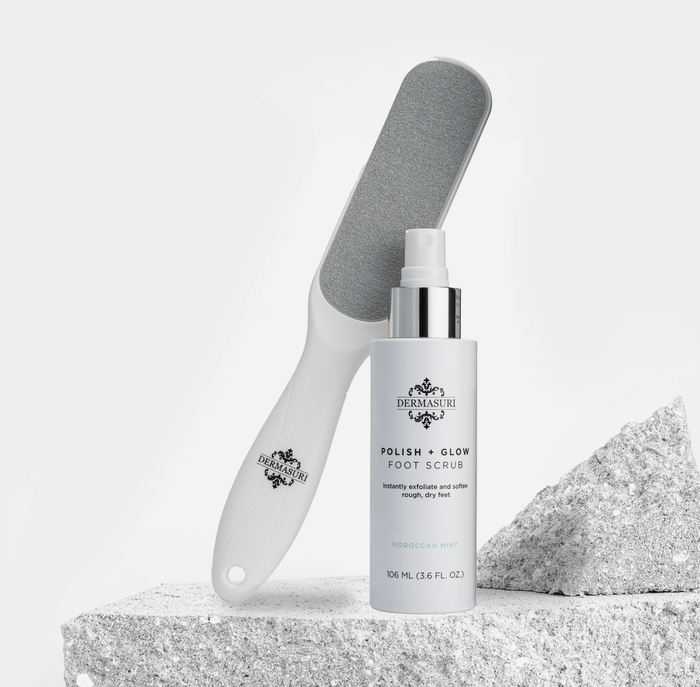
Buff in short strokes or small circles with light to medium pressure. Work the heel edges, the center of the heel, and any callused spots under the ball of the foot. The Dermasuri Deep Exfoliating Foot Scrub Set pairs a foot spray with a file for this step and is designed to soften rough patches and cracked heels. Use it on damp, softened skin. On dry feet it works less well and is more likely to irritate.
Not sure which tool suits your heels? The foot file vs pumice stone breakdown covers the difference. Whichever you use, rinse away the loosened skin, then pat your feet dry, especially between the toes. Moisture trapped there can lead to a different kind of foot problem.
Step 3: Lock in moisture right away
Freshly exfoliated heels lose their glow fast if you leave them bare. Right after exfoliation, apply a rich foot cream or balm while the skin is still slightly damp. This helps trap water in the skin and makes the softening effect last longer.
Look for textures that feel substantial, not watery. Heels need cushioning moisture, especially if they tend to crack. If your skin is extremely dry, applying moisturizer and then putting on cotton socks overnight can make a huge difference by morning. It is low effort, high payoff, and exactly the kind of ritual that feels a little extra in the best way.
Good ingredients to look for include urea, glycerin, ceramides, lactic acid, shea butter, and petrolatum. For dry, cracked heels, the American Academy of Dermatology recommends a cream with 10 to 25 percent urea, an alpha hydroxy acid, or salicylic acid. Massage the cream into each heel for about a minute instead of swiping it on, with extra attention on the outer rim, where cracks tend to start.
Step 4: Repeat before the buildup comes back
This is the part most people underestimate. If you wait until your heels feel rough again, you are always starting from behind. A better plan is light, regular maintenance. For many people, exfoliating one to two times a week is enough, depending on how quickly buildup returns.
It depends on your lifestyle. If you are in sandals every day, do high-impact workouts, or spend a lot of time on your feet, you may need more frequent touch-ups. If your heels are only mildly dry, once a week plus daily moisturizer may be plenty.
How to soften cracked heels at home
To soften cracked heels at home, use the same soak, exfoliate, and moisturize routine, only gentler: a short warm soak, light pressure around the cracks, and a thick, plain balm that protects split skin while it settles down. Shallow dryness usually responds well to steady care. Deep, painful cracks are a different situation, so check the warning signs further down before you reach for a file.
- Keep the soak plain. Fragranced bath products can feel luxurious, but some sting on cracked skin.
- Buff the thick, dry edges with light pressure and leave open cracks alone.
- Hold off on acids for now. Urea and exfoliating acids help with stubborn calluses but can sting on open fissures, so use a bland, fragrance-free balm until your heels are more comfortable.
- Moisturize every day, ideally after showering and again before bed if your heels crack easily.
The same steps work if you are trying to soften hard heels on your feet that are thick rather than split: soften first, buff second, then seal in moisture. With very thick heels, start with two gentle sessions a week, then drop to once a week as they feel smoother. Most dry heels feel soft and smooth again within a few weeks of steady care, and the daily habits below are what keep heels from cracking again.
How to soften rough heels overnight
To soften rough heels overnight, exfoliate in the evening, coat your heels in a thick cream or balm, and sleep in clean cotton socks. The socks keep the product on your skin for hours instead of rubbing off on your sheets, which is what makes heels feel softer by morning.
Start when you do not need to be back on your feet right away. Use more cream than feels normal. Your heels should look coated, not lightly moisturized. If they tend to dry out again by morning, smooth a thin layer of balm over the driest spots on top of the cream to seal it in.
Soft, breathable cotton socks work best. Skip tight socks or fabrics that leave your feet hot and sweaty, and make sure your feet are clean and dry before you put them on. If your feet run warm at night, wear the socks for an hour while you wind down instead.
If your heels are mostly dry with moderate buildup, they should feel noticeably smoother when you wake up: less ashy, less sharp against fabric, and more flexible. Deeply cracked or heavily callused heels usually need two or three nights of the same routine before they feel soft, followed by regular maintenance.
Trying to fix rough heels fast before an event this week? Start the routine two or three nights ahead rather than the night before, so a bigger session has time to settle. If self-tanner is part of the plan, exfoliate the day before you apply it, so the color has less dry texture to cling to.
Shop the story
Shop all Deep Exfoliating Foot Scrub Set (includes file)
 4-1 in 1 Exfoliating Foot Scrub Kit
 Ultimate Footcare (4-1 file + Spray/file set)
What to use on rough heels
The best products for rough heels pair one exfoliating step with one moisturizing step: a mitt or file to lift buildup, then a rich cream or balm to keep the new skin soft. Match the product to what your heels need right now.
| What your heels need | What to use | How to use it |
|---|---|---|
| Visible, sandy buildup | Foot scrub mitt or scrub set | On damp skin after a warm shower or soak, gentle strokes, once or twice a week |
| A thick callus in one spot | Foot file | On softened skin only, a few passes, stop before it feels tender |
| Thick, dry heels | Urea foot cream | A generous layer at night, massaged into the heel and sides of the foot |
| Smoothing between scrub sessions | Lactic or glycolic acid lotion | On non-scrub days, never on open cracks or right after a hard scrub |
| Heels that feel dry again by morning | Thick balm | A thin layer over your cream on the driest spots, then cotton socks |
| Dryness after every shower | Gentle cleanser | Warm, not hot, water and no heavy fragrance |
If you want one tool that covers several of these, the 4-in-1 exfoliating foot scrub kit has a dry brush, a pumice stone, a stainless steel foot file, and a sandpaper surface. For thick calluses, the roundup of the best foot scrubber for calluses compares the main tool types.
Acid lotions are a form of chemical exfoliation, so they work gradually instead of lifting skin on contact. You may get faster visible results by starting with a gentle physical session, then using an acid lotion to keep heels smooth. If you are deciding between the two, physical vs chemical exfoliation explains how they differ.
What actually helps rough heels stay smooth longer
Smooth heels depend on more than the exfoliation session itself. The habits around it matter just as much.
Daily moisturizer is the biggest one. Even the best exfoliating routine cannot compete with constantly dry skin. Keeping a foot cream by your bed makes the habit easier to stick with, and consistency beats perfection every time.
Your shoes matter too. Backless sandals and hard-soled shoes create more friction and leave the heel exposed, which can quickly undo your work. You do not need to give them up forever, but if your heels are in recovery mode, more supportive closed-back shoes can help.
If you stand for work, cushioned insoles and shoes with a supportive heel cup help as well. The less repeated pressure your heels take, the less reason your skin has to build a protective callus. Long, very hot showers and harsh, heavily fragranced cleansers work against you too, so warm water and a gentle body wash are enough.
Another sneaky issue is picking. Peeling at dry edges or trying to shave off hardened skin at home can leave heels uneven and irritated. Smooth skin comes from gradual removal, not DIY damage control.
Common mistakes in any guide to smoothing rough heels
The first mistake is going too hard, too fast. It is tempting, especially when your heels feel extra rough, but aggressive filing can leave skin sensitive and make the area look worse before it looks better.
The second is skipping moisture because the feet already feel smoother. This is usually how the roughness creeps right back in. Exfoliation removes the old dry layer. Moisture helps keep the new surface soft.
The third is using the wrong tool for the job. A gentle body exfoliator may feel nice, but it often is not enough for thick heel buildup. Foot skin needs something designed for that texture. On the flip side, tools that are too harsh are not a flex either.
Blades, razors, and sharp callus shavers sit firmly in the too-harsh group. They make it easy to remove too much skin, cause cuts, and raise the risk of infection. A thin body lotion is the opposite problem: lovely on arms and legs, but cracked heels usually need a thicker cream or balm.
The fourth is ignoring cracks. If your heels are deeply split, painful, or bleeding, treat that with extra care. In those cases, a gentler routine makes more sense, and severe cracking may need professional attention instead of more scrubbing.
How often should you exfoliate rough heels?
There is no single perfect schedule. If your heels are mildly dry, once a week may keep them smooth. If you get heavy buildup, twice a week often works better. Very frequent exfoliation can help some people at first, but only if it stays gentle.
A good rule is to watch your skin, not just the calendar. If your heels feel soft and comfortable, maintain. If they feel tight, ashy, or start catching on fabric, it is probably time for another session. The goal is to stay ahead of roughness, not wage war on it. For a closer look by skin type and tool, see how often to exfoliate your feet.
When rough heels need a different approach
Sometimes rough heels are not just a basic dryness issue. If you have persistent thickening, painful cracks, redness, itching, or peeling that does not improve with exfoliation and moisturizer, something else may be going on. Athlete's foot, eczema, and other skin concerns can mimic simple dryness.
That is where restraint matters. More exfoliation is not always the answer. If your skin seems irritated or inflamed, scaling back and getting expert advice is smarter than forcing another scrub session.
If you have diabetes, poor circulation, or reduced feeling in your feet, check with a medical professional before using a foot file or any exfoliating treatment. The same goes for cracks that are deep, bleeding, red, warm, swollen, or draining, or that are not getting better with gentle care.
The easiest routine to stick with
If you want this to happen, keep it simple. Exfoliate after a shower when your skin is softened, follow with a rich moisturizer, and keep up with quick maintenance instead of waiting for a heel emergency. A results-driven foot ritual does not need to be complicated to be satisfying.
If you love that instant before-and-after moment, this is exactly where physical exfoliation shines. Dermasuri built its approach around visible results you can feel right away, which is why foot care stops feeling like a chore and starts feeling like a very good idea. The scrub set and the 4-in-1 kit mentioned here are both in the Dermasuri foot care collection.
Soft heels come from staying consistent enough that your feet look polished, feel comfortable, and stop stealing attention from the rest of your glow. Give your heels a little regular effort, and the payoff is the kind you notice every time you slip into sandals.