Key takeaways
- Dry brushing is a light form of physical exfoliation done on dry skin before you bathe, and it mostly removes loose surface flakes.
- An exfoliating glove on warm, damp skin lifts the softened buildup underneath, which is the layer behind most rough texture.
- Dry brushing can give a short boost of surface circulation, but it does not detox your body and there is no proof it reduces cellulite.
- Use the glove for a deep session about once a week. Dry brushing is lighter, about 2 to 3 times a week for most skin.
- Skip both tools on sunburn, a rash, open cuts, active irritation, or a fresh shave or wax, and let skin heal first.
Dermasuri is an exfoliation brand known for visible skin smoothing: our tools lift dead skin you can see roll away. This guide explains the physiological differences in the dry brushing vs. exfoliating debate. While both methods aim to improve skin texture, they work in different ways. Knowing the difference between a dry brush vs. exfoliating gloves helps you pick the right tool, whether you want to treat dry skin, smooth rough bumps, or get a glass skin glow without overdoing it.
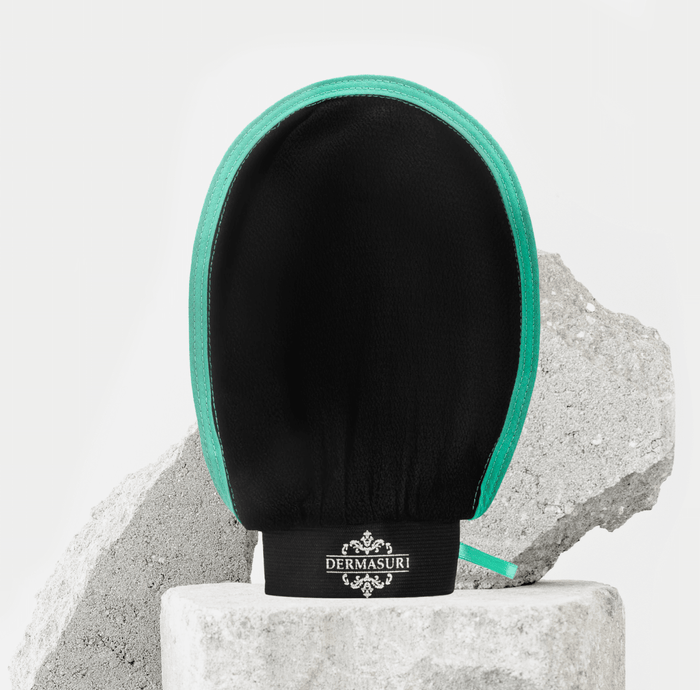
Both are forms of physical exfoliation. A dry brush is the lighter one, used on dry skin before you bathe. An exfoliating glove (some people call it a mitt; it is the same idea, a textured fabric you wear on your hand) is used on warm, damp skin in the shower and reaches deeper buildup.
What Is Dry Brushing?
Dry brushing is a wellness ritual that involves using a firm, natural-bristle brush to stroke the skin in a specific pattern, usually toward the heart. Unlike in shower exfoliating, this process is performed on completely dry skin before bathing. Many people do it to wake up their skin and to support lymph flow, though a brush is not a medical lymphatic drainage treatment.
While many mistake it for a deep resurfacing tool, dry brushing is a lighter ritual. It gives the surface a quick sweep and a temporary flush of circulation, which is why skin often looks a little pink and awake afterward.
The usual method is to start at your feet and brush upward toward the heart in long strokes, with small circles around your joints, for about 3 to 5 minutes. A body brush covers big areas fast, which is a big part of its appeal. For the full routine, see our dry brushing technique, step by step.
Is Dry Brushing the Same as Exfoliating?
Dry brushing is a form of exfoliation, but it is not the same as every kind of exfoliating. It is physical exfoliation done with stiff bristles on dry skin, and it mostly removes loose surface flakes.
Exfoliating is the bigger category. It covers any way of removing dead skin cells: dry brushes, exfoliating gloves and mitts, body scrubs, washcloths, and chemical exfoliants such as acids. So, is dry brushing exfoliating? Yes, a light version of it. Does dry brushing count as exfoliating for rough texture? Only partly. A brush sweeps off what is already loose, while a glove on warm, damp skin lifts the softened buildup underneath, which is the layer behind most rough texture.
Is a dry brush good for exfoliating? For a quick polish on calm, resilient skin, yes. If you want to see the dead skin come off, in-shower exfoliation does more.
Does Dry Brushing Help Lymph Flow, Cellulite, or Detox?
Dry brushing is mostly a skin-smoothing ritual. It can leave skin smoother and give a short boost of circulation at the surface, but the bigger claims need a reality check.
- Lymph flow: people brush toward the heart because the strokes move toward the lymph nodes. That can feel good, but it is not a medical lymphatic drainage treatment.
- Cellulite: any change is cosmetic and temporary. The Cleveland Clinic's guide to dry brushing notes there is no proof dry brushing reduces cellulite.
- Detox: your liver and kidneys handle that job. A brush does not pull toxins out through your skin.
If you love how dry brushing makes you feel, keep it in your routine. Choose it for the ritual and the light polish, not as a detox.
What Causes Skin Texture Issues?
Skin texture issues, like roughness, bumps, or unevenness, often stem from everyday factors disrupting the skin's barrier. Common culprits include dehydration, dead skin buildup, and environmental stressors.
1. Acne-Related Causes
Texture issues often linger long after a breakout has cleared. Congestion within the pores can create a "pebbled" appearance on the skin's surface. Past inflammation can also lead to a buildup of thickened skin tissue. While a dry brush is often too scratchy for acne-prone areas, a wet exfoliation ritual helps clear the debris that leads to future congestion without dragging bacteria across dry skin.
2. Dryness vs. Dehydration
There is a distinct difference between dry skin and dehydrated skin.
- Dryness (lack of oil) leads to flaking and "ashy" skin.
- Dehydration (lack of water) makes the skin look crepey and thin.
When skin is thirsty, the natural shedding process grinds to a halt. The dead cells "glue" themselves to the surface, creating a barrier that keeps your expensive moisturizers from sinking in. Deep exfoliation breaks this seal, so these moisturizers can be absorbed better.
3. Environmental Damage
Pollution, UV exposure, and harsh weather act as stressors that "toughen" the skin. This is a defense mechanism where the skin thickens its outer layer (the stratum corneum) to protect the delicate layers underneath. Over time, this results in a leathery texture.
Mechanical exfoliation with a Dermasuri glove acts as a "reset button," buffing away that weather-worn outer layer to reveal the protected, softer skin beneath.
4. Why Slow Renewal Causes "Strawberry Legs" and KP
This category covers the "engine" of your skin, or how well it regenerates and cleanses itself from the inside out.
- Slow Renewal: As we age, the skin renewal cycle slows down. What used to take 28 days can take over 40 days, leading to a dull, gray complexion.
- Clogged Pores: Excess keratin (a natural protein) can harden inside the follicle. This is the root cause of "strawberry legs," a condition commonly associated with folliculitis and keratosis pilaris (KP).
- Poor Circulation: Your skin is your body's largest organ. Many people dry brush for a quick, temporary flush of circulation at the surface, which can make skin look more awake for a little while.
How to Treat Skin Texture Effectively
Think of your skin like a favorite fabric. If the surface is dusty, a light dusting won't fix it. You need to deep clean the exterior, then give the skin underneath the moisture it needs.
1. The "Outside-In" Method: Deep Wet Exfoliation
This is the go-to method for smoothing "strawberry legs" and rough patches. When you use a Dermasuri exfoliating glove in a warm shower, the water softens the hardened keratin and dead cells.
- The Result: The fabric physically grips and "rolls away" the debris that a dry brush simply flicks over.
- Why it works: It removes the physical barrier that causes bumps and dullness, revealing the fresh, glowing skin hidden underneath.
2. The "Inside-Out" Method: Circulatory Support
Using either a dry brush or a firm glove ritual brings a temporary rush of blood flow to the skin's surface.
- The Result: Skin looks flushed and awake for a while afterward, and many people find the ritual helps them feel less puffy.
- Why it works: Friction wakes up the surface for a fresher look. Treat it as a feel-good bonus, not a detox.
3. The Bridge: Barrier Hydration
Once you have cleared the "Outside" and woken up the "Inside," your skin is ready for moisture. This is the best window for moisturizers.
- The Result: Creams and oils can sink in instead of sitting on top of a layer of dead cells.
- Why it works: It seals the skin barrier, locking in the glass skin glow and preventing the dehydration that leads to future texture issues.
Why In-Shower Exfoliation Works Better for Renewal
Choosing between dry brushing and in-shower exfoliating depends on your goal: a gentle wellness ritual or a deeper skin reset. While both have their merits, in-shower exfoliation is the better choice for real skin renewal. So, is dry brushing better than exfoliating in the shower? For a quick wake-up, it can be. For smoother texture, no.
The biggest difference between the two is the presence of water. When you brush dry, your skin cells are hard, brittle, and stubborn.
Dry brushing can "flick" off loose surface flakes, but it lacks the grip to lift the dense layer of buildup that causes real texture issues. In contrast, in-shower exfoliating uses heat and moisture to your advantage. By allowing your skin to soak for a few minutes, you soften the "keratin glue" holding dead cells together.
When you apply a Dermasuri exfoliating glove, these water-softened cells are easily gripped by our unique fabric and rolled away visibly.
Is dry exfoliating good for skin? For a light polish on calm skin, it can be. Dry exfoliation vs. wet comes down to what each tool can reach. On dry skin, bristles skim and sweep. On softened, damp skin, a glove can release the layer that is already ready to shed, which is why it tends to win on rough patches, dullness, and flaky legs. It also leaves skin ready for lotion, body oil, or self-tanner, and our guide on how to exfoliate before self tanning covers the timing.
A glove also puts the pressure in your hands. You can go lighter over the chest, inner thighs, and bikini line, and spend a little longer on knees and elbows. Brushing harder with a dry brush does not give better results. Too much pressure leaves skin tender and stripped instead of silky.
Can you dry brush with exfoliating gloves? We don't recommend it. Our glove is made of a plant-based microfiber mesh that is activated by water, so it is designed for damp, warm skin. The reverse holds too: if you're comparing dry brushing vs. wet brushing, our Wooden Dry Brush is meant for completely dry skin only. Brush first, then shower, and save the glove for the water.
Best Tools for Every Routine
For the best results, you don't have to choose one over the other. A good routine treats them as partners rather than rivals. You might use a dry brush a few times a week before your shower and a deep in-shower exfoliation session once a week for a full skin reset.
- Choose Dry Brushing if your goal is an "Inside-Out" morning wake-up call, a light surface polish, or a ritual you can do without getting wet. It suits skin that tolerates bristles well.
- Choose In-Shower Exfoliation if you want an "Outside-In" reset, specifically if you want to smooth "strawberry legs," clear clogged pores, or get that baby-soft glass skin glow fast. Use exfoliating gloves or exfoliating shower towels from Dermasuri.
If you want to try both, the Dermasuri Wooden Dry Brush uses plant-based sisal fibers for a light, dry polish. Our Shower Ritual Set pairs that brush with the Deep Exfoliating Glove: brush before you step in, then use the glove once you're in the water.
If bristles feel too scratchy on your skin, the shower-based alternatives to dry brushing are an exfoliating glove, an exfoliating shower towel, or a body scrub.
Dry Brush vs. Body Scrub: Which Is Better?
A dry brush is for dry skin before the shower, and a body scrub is for wet skin in the shower. Neither one is better for everyone. The brush gives a quick, light sweep, while a scrub polishes as you massage it in and leaves skin feeling softer when you rinse.
Our Sugar Body Scrub uses sugar crystals to exfoliate, with moisturizing ingredients that help leave skin soft and smooth. It rinses clean without a heavy or greasy residue. Sugar is generally gentler than salt, so it suits more skin types, and most people use it 1 to 3 times a week.
Dry brushing vs. body scrub comes down to timing and feel. Brush when you want a fast, dry ritual before you shower. Scrub when your skin feels dry or rough and you want it softer right away. If you are also weighing a scrub against a glove, see our breakdown of exfoliating gloves vs. body scrubs.
Shop the story
Shop all Deep Exfoliating Glove Body Scrub
 Wooden Dry Brush
 Shower Ritual Set - Wooden Dry Brush + Deep Exfoliating Glove
Why Dermasuri Is Different
Dermasuri tools bridge the gap between wellness rituals and spa-style results. While a dry brush provides a light scratch to the surface, a Dermasuri exfoliating glove uses a plant-based microfiber mesh, activated by water, that's designed to catch and lift dead skin cells you can see.
Unlike standard loofahs or plastic shower puffs, which are often too soft to do much, Dermasuri tools provide the right level of friction to "roll" away dead skin. That is the reason Dermasuri exists: our founders wanted exfoliation that goes beyond the usual dry brushing and loofahs. It is a spa-style experience that fits right into your existing shower routine.
Results Users Can Expect
When you switch from dry skin brushing to wet exfoliating with Dermasuri, you will notice:
- Visible Debris: Unlike dry brushing, where you barely see or feel the light exfoliative effects, with Dermasuri, you will see actual rolls of dead skin.
- Softer Texture: Skin feels "baby-soft" immediately after the first wet session.
- Reduced Ingrowns: Deeper exfoliation helps clear the path for hair to grow correctly, which a dry brush often misses.
- Better Glow: Because you are removing more dead skin, light reflects off the surface more evenly, creating a glass skin effect.
Which Is Better for Rough Texture and Ingrown Hairs?
For rough body texture, an exfoliating glove is usually the more targeted option. Use it gently and consistently on the areas that need attention, then follow with moisture while skin is still slightly damp.
For ingrown-hair-prone areas, timing matters more than force. Gentle exfoliation helps keep the surface clear of the dead skin that can trap hairs, but skip freshly shaved, waxed, broken, or irritated skin and give it time to settle first. A dry brush can work on the legs before hair removal for some people, though it is less precise around sensitive zones.
If bumps are inflamed, painful, or keep coming back, skip the friction and see a dermatologist. For tool picks, see our guide to the best exfoliators for ingrown hairs.
How to Use a Dermasuri Exfoliating Glove
To master the "Outside-In" approach and see the visible results Dermasuri products are known for, follow this five-step ritual. The key is creating the perfect environment for the fabric to grip and lift.
- Step 1: The Soften (5 to 10 Minutes). Relax in a warm bath or shower to soften the keratin (the protein in your skin) so it's ready to be lifted.
- Step 2: Skip the Soap. Don't use body wash or oils before scrubbing. For the glove to work, it needs pure friction against damp skin. Using soap or applying extra oils creates too much "slip," which prevents the fabric from gripping the dead skin cells.
- Step 3: The Deep Scrub. Step away from the water stream and use firm, circular motions with your Dermasuri glove, firm but never painful, and lighter over sensitive spots. Start at your ankles and work upward, then go from your wrists toward your shoulders. Spend a little extra time on knees and elbows, but don't keep rubbing the same spot. You'll know it's working when you see the dead skin begin to roll away in visible "noodles."
- Step 4: The Refreshing Rinse. Step back under the water to wash away the debris. Your skin will immediately feel smoother to the touch.
- Step 5: The Hydration Window. Now that you've cleared the surface, your skin is ready for moisture. While your skin is still slightly damp, apply a rich body cream or oil. Without that layer of dead skin in the way, your skin care products can finally sink in and work their best.
Want more detail on technique? Here is our full guide on how to use exfoliating gloves.
How Often to Use Each Tool
Use the glove for a deep session about once a week. Our glove FAQ suggests once every 1 to 2 weeks, so if your skin is sensitive, stretch the gap.
Dry brushing is lighter, so it can happen more often. Our Wooden Dry Brush guide suggests 2 to 3 times a week for most skin, 3 to 4 times for dry climates or rough texture, and 1 to 2 times for sensitive skin.
If you pair both in one routine, start with 1 to 2 sessions a week and give your skin two to three days to recover before you add more. If your skin stings, looks angry, or feels raw afterward, the tool or technique is too much.
How to Care for Your Brush and Glove
After each use, rinse the glove well, wring out the water, and hang it to dry. Replace it every 4 to 6 months, or sooner if you use it often.
For the dry brush, tap out loose skin after each session and wash it with gentle soap and warm water every 1 to 2 weeks. Let it air dry completely with the bristles facing down, since a brush that stays damp holds onto moisture and residue. Replace it when the bristles get bent, worn, or hard to clean.
When Should You Skip Dry Brushing or Exfoliating?
Skip both tools when your skin is stressed: sunburn, a rash, open cuts, active irritation, or a fresh shave or wax. Let it heal first. The same goes for skin that is peeling from strong exfoliating acids, retinoids, or other treatments.
Dry brushing needs extra care. Stiff bristles on dry skin can feel scratchy over the chest, inner thighs, or bikini line, and if you tend toward redness, sensitivity, or eczema flare-ups, it may be more than your skin wants. Never brush over broken, inflamed, or sunburned skin, keep the body brush off your face, and stop if irritation shows up.
Sensitive skin can often still exfoliate with lighter pressure and more time between sessions. Here is how exfoliating gloves work on sensitive skin and at different ages. If you have a diagnosed skin condition or you're unsure whether physical exfoliation is right for you, check with a dermatologist first.
About Dermasuri
At Dermasuri, we believe your daily shower should be a total skin reset. We've traded harsh chemicals for clever fabric technology that rolls away dead skin cells to reveal a fresh, healthy glow instantly. Our exfoliating tools physically lift away dead skin to reveal your softest, smoothest self in a single use. Loved by shoppers worldwide, our mission is to make spa-style skin smoothing easy and accessible from the comfort of home.