Key takeaways
- You can use both. Keep physical and chemical exfoliation on separate days rather than doing one right after the other.
- Most people do well exfoliating the face once or twice a week and the body two or three times a week, one exfoliant at a time.
- AHAs like glycolic and lactic acid can make skin more sensitive to the sun, so use sunscreen while you use them and for a week after.
- Sensitive skin can use either method. Start slow, patch test acids first, and choose based on the area you are treating.
- Redness, stinging, peeling, or skin that feels raw means you are overdoing it. Stop and give your skin a few days off.
Some exfoliators give you that instantly smoother, almost shocking kind of payoff. Others work more quietly in the background and make your skin look clearer, brighter, and more even over time. That is the real conversation behind physical exfoliation vs chemical exfoliation. The question is less about which one is "better" and more about which one makes sense for your skin, your goals, and how fast you want to see a difference.
If you have ever stood in the shower wondering whether to reach for an exfoliating mitt or a serum with acids, you are not overthinking it. These two approaches remove dead skin in completely different ways, and the right choice can change how your skin looks, feels, and behaves.
Physical exfoliation vs chemical exfoliation: what is the difference?
Physical exfoliation lifts dead skin off with a tool or a scrub, while chemical exfoliation uses acids or enzymes to loosen dead skin so it sheds on its own. So yes, exfoliants can be physical or chemical, and most products fall clearly into one camp or the other.
Physical exfoliation removes dead skin manually. Think exfoliating gloves, scrub mitts, face tools, foot files, or scrubs with textured particles. You are physically lifting away buildup from the surface of the skin, which is why the results often feel immediate. Skin can look smoother right away, rough patches feel softer, and that dull, dry layer finally stops stealing your glow.
You will also see it called manual or mechanical exfoliation, or physical peeling. A physical scrub simply means a product with grains, like the sugar crystals in our Sugar Body Scrub, that you massage over damp skin to buff away dryness.
Chemical exfoliation works by using acids or enzymes to loosen the bonds between dead skin cells so they shed more easily. Common examples include AHAs like glycolic or lactic acid, BHAs like salicylic acid, and enzyme exfoliants made from fruit extracts. Instead of scrubbing, you apply a formula and let it do the work over time. If you want the step-by-step on what happens to dead skin cells either way, here is how exfoliation works.
Both methods are valid. Both can improve texture and radiance. But they are not interchangeable in every situation.
Physical vs. Chemical Exfoliation at a Glance
Here is the short version: physical exfoliation is faster and you can feel it, while chemical exfoliation is slower and more targeted.
| Physical exfoliation | Chemical exfoliation | |
|---|---|---|
| How it works | Friction lifts dead skin off the surface | Acids or enzymes loosen the bonds between dead cells so they shed |
| Examples | Exfoliating gloves and mitts, face tools, foot files, sugar or grain scrubs | AHAs (glycolic, lactic acid), BHAs (salicylic acid), fruit enzymes |
| When you see results | Right away, often in the same shower | Gradually; the full effect can take a few weeks |
| Best for | Rough, flaky, dry buildup on the body, feet, knees, and elbows; self-tan prep | Clogged pores, breakouts, uneven tone, and dullness, mostly on the face |
| Skin that tends to like it | Normal to oily, resilient, or thicker skin | Breakout-prone skin and skin that dislikes rubbing |
| Watch out for | Too much pressure, too often, or harsh particles | Strength too high, layering several acids, and sun sensitivity with AHAs |
When physical exfoliation makes the most sense
Physical exfoliation shines when you want visible payoff now. If your skin feels rough, flaky, ashy, or covered in that stubborn layer of dry buildup that lotion never seems to fix, this method tends to deliver the fastest visible difference. It is especially satisfying on the body, where skin is thicker and common concerns like KP, dry legs, rough elbows, and pre-tan prep call for a little more muscle.
This is also where body-focused tools really earn their spot in your routine. A well-designed exfoliating mitt or glove can slough off a surprising amount of dead skin without turning your shower into a science lab. You see the difference, you feel the difference, and yes, it can be one of those OMG, is that my skin moments.
Physical exfoliation is also a strong option for areas that collect more obvious buildup, like feet, knees, and the back of the arms. If your goal is smoothness, softness, and better product absorption, manual exfoliation gets straight to the point.
It tends to suit normal to oily and more resilient skin best, especially when the skin is rough or thickened. If your skin is dry or easily irritated, you can still use it, just with a softer tool, lighter pressure, and more days between sessions.
That said, technique matters. Too much pressure, too much frequency, or overly harsh particles can leave skin irritated instead of glowing. Physical exfoliation should leave you smooth, not raw.
Best uses for physical exfoliation
On the body, physical exfoliation is often the go-to for dry skin, rough texture, flaky patches, self-tan prep, and helping reduce the look of ingrown hairs and razor bumps.
On the feet, it is the obvious winner for callused skin that needs serious smoothing. On the face, it can work, but the tool or formula needs to be much gentler because facial skin is thinner and easier to overdo.
When chemical exfoliation has the edge
Chemical exfoliation tends to be the better fit when your goals go beyond surface roughness. If you are dealing with clogged pores, acne, post-breakout marks, uneven tone, or a generally congested look, acids often bring more precision. A BHA like salicylic acid can get into oil-filled pores, while AHAs help with dullness and texture on the surface.
This is why chemical exfoliation is so popular for the face. It can improve skin clarity without the rubbing motion that some sensitive or breakout-prone skin types dislike. It is also useful if you want gradual maintenance rather than a dramatic one-and-done shower result.
The trade-off is patience. Chemical exfoliants rarely give the same immediate tactile payoff as a strong physical exfoliation session on the body. You may notice brightness fairly quickly, but the full effect usually builds with consistent use, and that can take a few weeks.
They also come with their own learning curve. Too high a strength, too many exfoliating products layered together, or daily use when your skin is already stressed can lead to stinging, peeling, or a compromised skin barrier. More acid is not more glow.
So how is a lactic acid scrub different from a physical scrub? Lactic acid is an AHA, so it loosens dead cells with chemistry, while a physical scrub lifts them with grains or texture. If a product has both acid and grains, it is doing two kinds of exfoliation at once, so count it as both when you plan the rest of your routine.
One more rule for AHAs like glycolic and lactic acid: they can make your skin more sensitive to the sun. The FDA guidance on alpha hydroxy acids recommends sunscreen, covering up, and limiting sun exposure while you use AHA products and for a week afterward.
Shop the story
Shop all Deep Exfoliating Glove Body Scrub
 Sugar Body Scrub
 Deep Exfoliating Face Scrub
Physical exfoliation vs chemical exfoliation for sensitive skin
Here, the answer really is: it depends.
A lot of people assume sensitive skin should always avoid physical exfoliation. Not necessarily. Harsh scrubs with jagged particles or aggressive rubbing can absolutely be a problem, but a gentle, controlled physical exfoliator used correctly may work beautifully for some people, especially on the body.
On the flip side, chemical exfoliation sounds gentler because there is no scrubbing, but acids can sting, trigger redness, or create irritation if the formula is too strong or used too often. Sensitive skin does not automatically love chemical exfoliants just because they are liquid.
If your skin reacts easily, the smartest move is to start slow and choose based on the area you are treating. Body skin may tolerate a soft physical exfoliating tool once or twice a week. Facial skin may prefer a milder lactic acid or enzyme formula used less often. The winner is the one your skin can handle consistently without getting angry.
With acids, patch test first: try a small amount on one spot before you use it all over. And if you are wondering whether a chemical exfoliant or a physical scrub is safer for daily use on sensitive skin, the usual answer is neither. Gentle exfoliation means a soft tool or a mild formula, light pressure, short sessions, and rest days in between.
Which is better for body care?
For many body concerns, physical exfoliation is hard to beat. Dry buildup on legs, rough arms, flaky skin before shaving, and uneven self-tanner are all situations where immediate manual exfoliation makes practical sense. You are removing what is already sitting on the surface, which is why the payoff is so satisfying.
Traditional exfoliation rituals still feel right at home here. There is a reason exfoliating gloves and mitts inspired by Turkish and Korean bath practices have stayed so popular. They are simple, they work, and they give you that fresh-start skin feeling people want. If you are curious about the hammam side of this, see what a Turkish exfoliating mitt does.
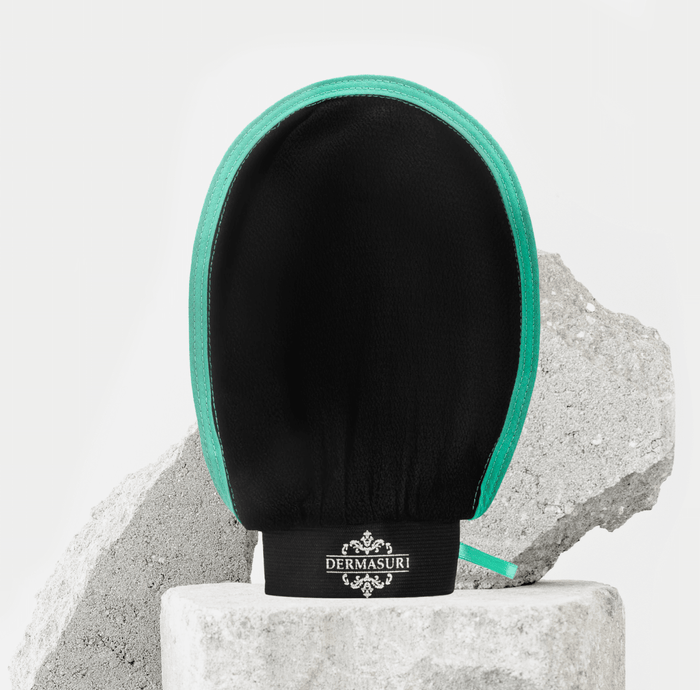
Our Deep Exfoliating Glove is made for exactly this. It uses a plant-based microfiber mesh that is activated by water, so you use it on wet skin with no soap, and it gives a deeper scrub than a typical body scrub. Because one session is that thorough, we recommend using it about once every 2 weeks.
Chemical exfoliation can still play a role on the body. Lotions with AHAs or BHAs can help maintain smoothness between exfoliation sessions, and they are useful for concerns like body acne or persistent bumps such as keratosis pilaris. But if your main goal is to get rid of rough, visibly dull skin fast, physical exfoliation usually takes the lead.
Which is better for the face?
The face is where the details matter most. Chemical exfoliation often wins for people focused on pores, acne, discoloration, or overall radiance with minimal friction. It can be more targeted and easier to control with the right formula.
Physical exfoliation on the face is not off-limits, but it needs a lighter touch. The best facial physical exfoliators are finely milled, soft, or tool-based in a very gentle way. If your face gets red easily, has active breakouts, or already uses retinoids, strong physical exfoliation may be too much.
If you like a tool, our Deep Exfoliating Face Scrub is a mitt made for the face, neck, and shoulders. Use it with water only for a deeper session, or after your regular face wash for a lighter touch.
Chasing brightness? Both can help, in different ways. A gentle physical exfoliation gives an instant polish because it clears the dull surface layer, while acids build brightness and a more even tone over time. If fine lines are part of your goal, read how exfoliation affects skin aging before you choose.
For people who crave that polished, smooth feel, occasional gentle physical exfoliation can still be part of the routine. Just not with the same intensity you would use on elbows or heels.
Can you use both?
Yes, and a lot of people get the best results from a balanced approach.
You might physically exfoliate your body once or twice a week for immediate smoothness, then use a chemical body lotion on off days to help maintain softness. On the face, you might use a mild acid toner or serum regularly and save physical exfoliation for occasional texture touch-ups if your skin tolerates it.
The key is not stacking too much exfoliation at once. Using a scrub, an acid peel, a retinoid, and a strong cleansing brush in the same routine is how skin goes from glowing to irritated fast. Keep physical and chemical exfoliation on separate days rather than doing one right after the other. Exfoliation should reveal better skin, not leave it feeling raw.
How Often Should You Use Each?
Most people do well exfoliating the face once or twice a week and the body two or three times a week, using one kind of exfoliant at a time.
That is the general guidance from Cleveland Clinic, which also suggests exfoliating more often if your skin is oily and pulling back if it is sensitive or dry. It warns against using a physical exfoliant right after a chemical one, because that can leave skin more sensitive and irritated, and it recommends letting your skin rest and recover between sessions.
Deep tools sit at the low end of that range. Our Deep Exfoliating Glove and Deep Exfoliating Back Scrub are made to be used about once every 2 weeks, because a single session lifts so much buildup. Softer tools and mild acid lotions can fill in the days between, as long as your skin stays calm.
Signs you are overdoing it include redness, irritation, stinging, peeling, or skin that feels raw. If you notice any of them, stop and give your skin a few days off before you start again, at a lower intensity.
How to choose the right one for your skin goals
If your skin concern is roughness you can feel, physical exfoliation usually makes the most sense. If your concern is clogged pores, discoloration, or breakouts, chemical exfoliation often offers more targeted support. If you want both instant smoothness and longer-term clarity, you may want both, used strategically.
Think about the result you want most. Do you want to step out of the shower feeling unbelievably soft today? Are you trying to keep ingrown-prone areas smoother? Are you prepping for self-tan? Physical exfoliation is probably your move. Are you chasing clearer pores, fewer bumps, or a more even-looking complexion over time? Chemical exfoliation may deserve the spotlight.
For a lot of people, the choice is less about picking a side and more about building a routine. If you are still weighing the benefits of exfoliating in general, start there.
And if you love skincare you can see and feel working, physical exfoliation has a special kind of magic. Done right, it turns basic body care into a ritual you look forward to, the kind that makes you want to check your skin twice just to admire it again. That feeling is what Dermasuri was built around.
The best exfoliator is the one that matches your skin, your lifestyle, and the results you want to see in the mirror tomorrow morning.