Key takeaways
- Exfoliation removes dead skin cells from the outer layer of your skin so its natural renewal can take over.
- Physical exfoliation uses friction to break the bonds between dead cells, while chemical exfoliants use acids to dissolve them.
- Warm water softens the dead layer, and a high-friction fabric on damp skin catches those cells and lifts them away in visible rolls.
- Skip soap while you exfoliate, because it reduces the friction needed to lift dead skin.
- Once or twice a week is plenty for most people, and the Deep Exfoliating Glove is designed for once every 1 to 2 weeks.
Dermasuri is a clinical exfoliation brand known for visible skin smoothing using high-performance exfoliating tools. This guide explains the biological mechanism of skin cell turnover and answers the common question: how does exfoliation work?
By understanding the physics of friction and the anatomy of the stratum corneum, we can reveal why physical tools like the Dermasuri exfoliating glove produce instant, visible results that traditional scrubs cannot match.
What is Skin Exfoliation?
To understand the “how,” we must first define what skin exfoliation is. At its core, skin exfoliation is the process of removing dead skin cells from the outer layer of your skin.
Your skin is a self-renewing organ that constantly produces new cells in the lower layers of the epidermis. These cells slowly travel upward toward the surface. By the time they reach the top, they have hardened, lost their nucleus, and turned into flat, keratinized scales.
Under ideal conditions, your skin constantly regenerates through a process called desquamation, where dead cells shed naturally to make room for fresh, resilient tissue. It’s a process that helps your skin heal from environmental damage and maintain its protective barrier.
However, factors like aging, dehydration, and environmental stress can cause this cycle to stall. Instead of shedding, dead cells remain “glued” to the surface by hardened lipids and excess sebum. This buildup leaves your skin feeling rough and looking dull.
What Does Exfoliation Do for the Body?
Exfoliation is the strategic intervention that restarts this engine. By manually or chemically detaching those stubborn cells, you clear the path for your skin’s natural renewal to take over and reveal the fresher skin that’s been waiting underneath.
Exfoliation serves several critical functions, including:
- Unclogging Pores: It helps prevent the mixture of dead skin and oil from forming comedones (blackheads and whiteheads).
- Boosting Circulation: The rubbing action brings blood to the surface for a short while, which is the healthy pink flush you see right after a session.
- Improving Absorption: By removing the "dead barrier," your lotions, serums, and treatments can reach fresh skin instead of sitting on top of dead buildup.
If you are wondering whether exfoliation can firm skin or soften wrinkles, that is a separate question, and we cover it in our guide to how exfoliation affects skin aging.
How Does Exfoliation Work Mechanically?
The secret to the "rolling skin" effect found in Dermasuri products lies in mechanical physics. While chemical exfoliants use acids to dissolve the cellular "glue," physical exfoliation uses friction to break the bonds between dead cells.
The science depends on the “state” of the skin. When skin is soaked in warm water, the keratin in the dead skin cells absorbs moisture and swells. This weakens the structural integrity of the dead layer.
When you introduce a high-friction fabric, such as the weave found in exfoliating gloves, the fabric catches onto the edges of these softened cells. As you move the glove, the cells are bundled together into visible rolls, which provide immediate proof that the exfoliation is working.
Physical vs. Chemical Exfoliation
Physical exfoliation lifts dead skin off by hand, with a glove, brush, towel, or scrub. Chemical exfoliation uses alpha or beta hydroxy acids to dissolve dead skin cells instead of rubbing them away. Lactic acid, a common ingredient in toners and serums, is one of the gentler chemical exfoliants.
Both methods leave fewer dead cells on the surface. The difference is how they get there and how your skin feels along the way. We compare the two side by side in our guide to physical vs. chemical exfoliation.
Why an Exfoliation Glove Works Better than Scrubs
A body scrub works by rubbing grit across your skin to knock dead cells loose. Traditional scrubs use small particles (like salt, sugar, or plastic beads) suspended in a slippery oil or soap base. The catch is that the soap reduces the friction needed to lift the dead skin. Most of the “grit” simply slides over the surface.
In contrast, using a dry-weave exfoliating shower towel or glove on damp skin allows for maximum “grip.” This grip is what allows the tool to catch the dead layer and peel it back, rather than just polishing the top of the debris.
Shop the story
Shop all Deep Exfoliating Glove Body Scrub
 Japanese Exfoliating Shower Towel
 Wooden Dry Brush
Best Tools for Visible Results
To achieve professional-grade results at home, the tools must be engineered to provide specific levels of friction for different skin thicknesses:
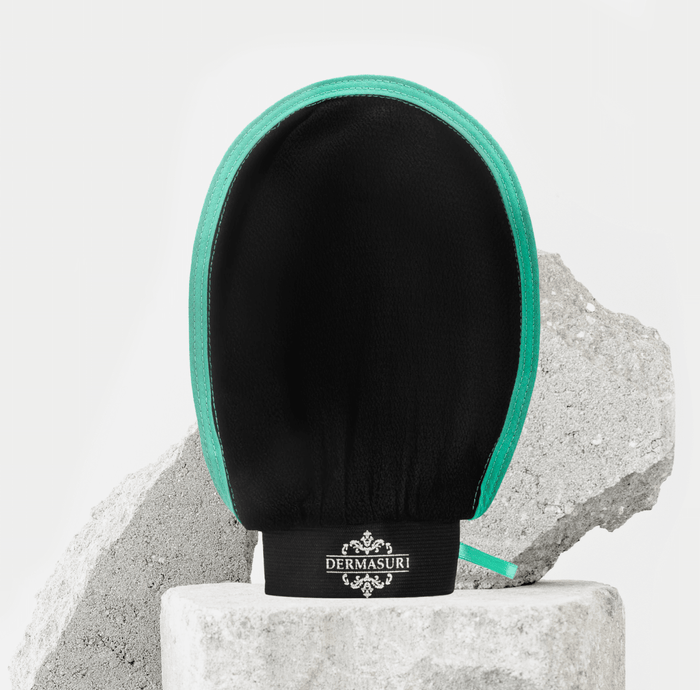
- The Deep Exfoliating Body Glove: Designed for the thicker skin on the arms, legs, and torso where dead skin accumulation is highest.
- Exfoliating Shower Towel: A long, textured towel that brings the “visible roll” effect to the hard-to-reach areas of the back.
- Sugar Exfoliating Scrub for Lips: While the body requires high friction, the lips require a specialized sugar exfoliating scrub for lips to gently dissolve flakes without damaging the thin mucosal tissue.
- Deep Exfoliating Foot Scrub Tools: Specifically for the heels and soles, where the keratin layer is the thickest on the entire body.
- Wooden Dry Brush: Natural sisal bristles that exfoliate lightly and sweep away dry skin before you step into the shower.
- Two Sided Exfoliating Glove: One side gently exfoliates and the other works as a soft washcloth, so it fits into an everyday shower.
Why Dermasuri is Different
Dermasuri tools are engineered with a proprietary viscose rayon fabric that brings professional-grade results into your own bathroom. While generic loofahs or plastic mitts simply move soap around the surface, our unique weave is designed to create the perfect amount of friction to catch and lift away what other tools leave behind.
This high-performance material is specifically built to work with water alone. By skipping the soaps and oils during the exfoliation phase, the glove maintains a total “grip-to-skin” connection. This allows the fabric to grab onto stubborn buildup and roll it away effortlessly.
Dermasuri serves as the go-to brand for those who want to see the results of their hard work. Our tools go beyond a simple scrub for hygiene. Instead, they resurface your skin for a more pleasing appearance, leaving it smoother and brighter than you ever thought possible.
Results that You Can Expect After Using Dermasuri Tools
When you understand how does exfoliation work and use the correct tools, you can expect:
- Noticeable Texture Change: Skin goes from rough and bumpy to "baby-smooth" as early as your first exfoliation session.
- Reduction in Bumps: Gently sloughing off dead cells is part of the dermatologist-recommended self-care for keratosis pilaris (KP), but hard scrubbing tends to irritate it and make it worse. Our keratosis pilaris guide covers KP in more detail.
- Even Skin Tone: Removes the gray, dull film that can hide your natural radiance.
- Radiant Glow: Improved blood flow provides an immediate, healthy flush to the skin.
How to Use an Exfoliating Glove for Maximum "Roll"
To see the roll in action, the technique is just as important as the tool itself. Follow these steps to clear away the buildup and reveal your smoothest skin yet.
- Optional, The Dry Brush: If you own a dry brush, give your dry skin a quick brushing before you step into the water. Use long, light strokes and keep the pressure gentle. If you are choosing between the two methods, see our take on dry brushing vs. exfoliating.
- The Deep Soak: Start with a 5 to 10 minute soak in a warm bath or shower so you can prep your skin while relaxing. The warmth and moisture soften the stubborn, dry outer layer, making it ready to be lifted away without resistance.
- The “No-Slip” Zone: Step out of the direct stream of water. Your skin should be damp, but not dripping wet. Avoid using any soaps, oils, or body washes yet. You want the fabric of the glove to “grip” the debris, and soap creates a slippery barrier that prevents the glove from doing its job.
- The Motion: Put on your exfoliating glove and use firm, long strokes or circular motions across your body. You’ll see the dead skin literally roll off, which serves as physical proof that you’re clearing away the old to make room for the new.
- The Clean Rinse: Now that you’ve lifted the dullness, rinse away the debris. Follow up with your favorite gentle cleanser to wash your skin completely clean. If you are not sure where each step fits, our guide to shower exfoliation order walks through it.
- The Deep Hydration: With the “barrier of dullness” gone, your skin is now at its most receptive to absorbing skincare treatments. Immediately apply a rich moisturizer or body oil. Because the path is clear, your skin will “drink up” the hydration, locking in a soft, healthy glow that lasts.
How often should you do this? Once or twice a week is plenty for most people, and the Deep Exfoliating Glove is designed for once every 1 to 2 weeks. Dermatologists put it simply: the more aggressive the exfoliation, the less often you need to do it, and you should never exfoliate over open cuts or sunburned skin. For a step-by-step walkthrough of the glove itself, see how to use exfoliating gloves.
Frequently Asked Questions About How Exfoliation Works
Does skin exfoliate on its own?
Yes. Your skin sheds dead cells on its own through desquamation, and new cells replace them from below. Exfoliation helps that shedding along when dead cells build up faster than they fall away, which is what leaves skin rough and dull.
Is it OK to exfoliate every day?
Not with a deep exfoliating tool. Harvard Health puts the limit at two or three times a week at most, and our Deep Exfoliating Glove is designed for once every 1 to 2 weeks. Overdoing it can irritate your skin. For a gentler everyday option, the soft side of a two-sided glove works as a washcloth. Our body exfoliation guide for beginners covers how often to exfoliate each area.
What is skin stimulation, and does exfoliation improve circulation?
Skin stimulation means waking up the surface of your skin with friction or pressure, and physical exfoliation is one form of it. Rubbing with a glove or dry brush brings blood to the surface for a short while, which is the pink flush you see after a session. That flush is short-lived. The change that lasts is smoother skin, because the dead layer is gone.
Can you use lactic acid with ceramides?
Yes. Lactic acid is a gentle chemical exfoliant, usually found in toners and serums, and ceramides are a common moisturizer ingredient that supports your skin barrier. Apply the lactic acid product first and the ceramide moisturizer after it. Do a 24-hour patch test behind the ear or on your inner forearm before you start, and begin with a lower strength used once or twice a week.
About Dermasuri
Dermasuri is a California-based beauty brand dedicated to the science of high-performance, clinical-grade exfoliation. By modernizing mechanical exfoliation with precision tools, Dermasuri provides a professional-grade skin-smoothing system designed to restore the skin’s natural cycle of renewal. It turns a stalled renewal cycle into smooth skin you can see right away.