Key takeaways
- A Turkish exfoliating mitt lifts dead skin with friction from a woven texture, with no grains, salt, or acids.
- Soften skin under warm water for five to 10 minutes, skip the soap, and use a mitt that is damp, not dripping.
- Use long, steady strokes with moderate pressure and stop when your skin feels smooth, not sore.
- One to two times a week suits most people; sensitive skin may need once a week or less.
- Moisturize while skin is still slightly damp, and rinse and air-dry the mitt after every use.
If you've ever stepped out of a long shower, rubbed your skin, and wondered why it still feels rough, that is exactly the moment a Turkish exfoliating mitt earns its hype. It's not your average loofah, not a basic washcloth, and definitely not one of those products that sounds exciting but does almost nothing. Used the right way, it can roll away layers of dead skin you didn't even realize were hanging on, leaving your body smoother, brighter, and weirdly satisfying to touch.
That instant payoff is exactly why this kind of exfoliation has stuck around for generations. Inspired by Turkish hammam bathing rituals, where deep exfoliation is done with a woven cloth, the mitt takes an old-world technique and turns it into a modern shower moment with very visible results. Think less "gentle polishing" and more "OMG, is that really all dead skin?"
What makes a Turkish exfoliating mitt different?
The short answer is friction. A Turkish exfoliating mitt is designed to create enough grip against damp, softened skin to lift away built-up dead skin cells that body wash alone won't touch. That's why it feels so different from a scrub packed with sugar or a fluffy bath sponge that mostly just lathers soap.
The texture is the whole point. Instead of dissolving or rinsing away, the exfoliation comes from the mitt physically sweeping across the skin. When your skin has been softened by warm water and you use the mitt on clean, product-free skin, you can often see the dead skin ball up and roll away. It's dramatic in the best way.
That visible result is also why people reach for it before self-tanner, after weeks of dry skin buildup, or anytime their legs, arms, elbows, or bikini line need a reset. Smooth skin looks better, feels better, and tends to wear body products more evenly.
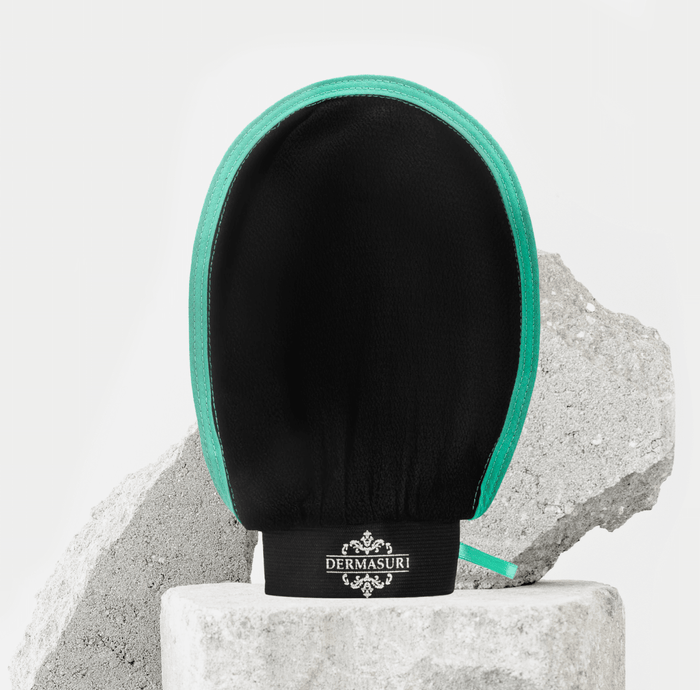
Physically, a Turkish exfoliating mitt is a firm, finely textured glove or pouch with a woven surface. A body scrub relies on grains, sugar, salt, or acids to exfoliate. The mitt relies on friction alone, so nothing piles up on your shower floor.
That also gives you more control. With a scrub, it's easy to lose track of how much pressure you're using, and oily formulas can leave a residue behind. With a mitt, you can work harder on rough zones like knees, ankles, elbows, and the backs of arms, then ease up where skin is naturally more delicate.
Why people get obsessed with the results
Some exfoliating products ask for patience. This one usually doesn't. A good mitt can give you that freshly reset feeling in one session, which is a big part of the appeal for anyone who wants a low-effort routine with a high-payoff finish.
The biggest benefit is smoother texture. If your skin feels bumpy, flaky, or dull, removing that outer layer of buildup can reveal a softer surface underneath. Skin can also look brighter simply because it's no longer covered by dry, ashy residue.
There's also the prep factor. If you shave, deal with ingrown hairs, or use self-tanner, exfoliation matters. A Turkish exfoliating mitt can help clear away the dead skin that traps hairs or causes tanner to cling unevenly. It's not a cure-all, and it won't replace every other step in your routine, but it can make a noticeable difference in how your skin behaves and how smooth it feels after.
That said, more friction is not always better. If your skin is irritated, sunburned, freshly shaved, or naturally very sensitive, going in too aggressively can backfire. Great exfoliation should leave skin soft and refreshed, not raw and angry.
How to use a Turkish exfoliating mitt for the best peel
Technique matters more than people think. If you've tried one before and felt underwhelmed, there's a good chance the issue wasn't the mitt. It was the setup.
Start with warm water and give your skin time to soften. A quick rinse usually won't do it. Spend several minutes in the shower or bath first so the surface layer of dead skin loosens up. Then skip the soap for the area you want to exfoliate, or rinse it completely away. Oils, body wash residue, and slippery cleansers can make it harder for the mitt to grip.
Wring out the mitt so it's damp, not dripping. Skin should also be wet but not soaking. Then use firm, steady strokes over the body. You don't need to scrub like you're sanding furniture. Moderate pressure works better than frantic rubbing, and it's much kinder to the skin.
Most people get the best results on areas that tend to hold onto roughness: arms, legs, elbows, knees, ankles, and feet. The bikini line can also benefit if ingrowns are a concern, but be gentler there. If dead skin starts to roll off, you're in business. Rinse, pat dry, and follow with a moisturizer while skin is still slightly damp.
If you're prepping for self-tanner, do your exfoliation first and keep the follow-up skincare simple. Heavy oils right before tanning can interfere with application, so timing matters.
Go section by section
Five to 10 minutes under warm water is usually enough to soften the outer layer. It doesn't need to be scorching hot, which can leave skin feeling stripped. If you're in the bath, soak first and exfoliate near the end.
Once you start, turn off the direct spray or step slightly out of it, so water isn't constantly washing over the area you're working on. Then move in sections instead of racing from shoulder to ankle:
- Lower legs
- Thighs
- Forearms
- Upper arms
- Torso, if you want to
Legs and arms go first because that skin tends to be more resilient. Keep the mitt flat against your skin and use long, sweeping strokes. For a fuller walkthrough that works with any body mitt, see our guide to using exfoliating gloves.
You may see little gray rolls. That can be dead skin, though it can also include lint, product residue, and softened skin cells. The goal isn't the biggest possible roll, so stop when your skin feels smooth, not sore. And if nothing rolls off, the session still did its job. Skin can exfoliate without a dramatic visual moment.
Where to go lighter, and where to skip
Use barely-there pressure over the chest, inner thighs, and anywhere that feels sensitive. Skip these areas completely until they've calmed down:
- Freshly shaved skin
- Irritated skin or rashes
- Sunburn
- Cuts or broken skin
- Active breakouts
Your face needs its own gentler tool and technique. A body mitt is too intense for most facial skin, which is why Dermasuri makes a separate face exfoliating glove.
Rinse, wash, then moisturize
Rinse your body, then follow with a gentle body wash if you like that just-clean feeling. Pat skin dry rather than rubbing it with a towel, and finish with body cream, lotion, or a nourishing oil while skin is still slightly damp.
This is the step people underestimate. Exfoliation removes the dull, dry layer, but moisturizer is what keeps the smooth finish. If self-tanner is next, let your skin dry fully and follow the directions for your formula. Many tanners go on best when you skip heavy lotion on the areas you want to tan, except for a light layer on very dry spots.
What a Turkish exfoliating mitt can help with
Here the mitt really proves its worth. It's especially helpful for skin that feels rough rather than inflamed. Think texture problems, buildup, and dullness.
Dry, flaky skin is the obvious one. When moisturizer seems to sit on top instead of making skin feel soft, dead skin buildup may be getting in the way. Exfoliating first can help lotions and creams work better afterward.
It can also help with the look and feel of clogged areas, especially on the body. Bumpy upper arms, rough legs, and post-shave texture often improve when that layer of debris is removed consistently. For people who struggle with ingrown hairs, regular body exfoliation can help keep pores clearer and reduce the chance of hairs getting trapped under dead skin.
And then there's the glow factor. Smooth skin reflects light better. It's a small detail that makes a big visual difference, especially in warmer months or before an event when you want your legs, shoulders, or arms to look extra polished.
The mitt also handles the spots regular body wash can't soften. Go for your elbows and knees when they look ashy, your ankles and heels before sandal season, and the backs of your arms when texture makes sleeveless tops less fun.
Shaving is a timing question. Smoother skin gives a razor a cleaner surface, but exfoliating hard right before you shave can leave skin tender. Exfoliating the day before is a more comfortable rhythm for most people, and it's one of the habits we cover in our guide to preventing shaving bumps.
With ingrowns, gentle and consistent exfoliation helps most on the legs and bikini line. Don't scrub directly over inflamed bumps or broken skin, though. When bumps are painful, persistent, or look infected, put the mitt down and get professional advice.
Feet are their own category. A Turkish mitt can smooth light dryness on the tops and sides of your feet, but thick calluses usually need a dedicated foot scrubber. Your soles are tougher than your arms, and your face is far more delicate than either.
Shop the story
Shop all Deep Exfoliating Glove Body Scrub
 Deep Exfoliating Face Scrub
 Japanese Exfoliating Shower Towel
Who should be careful
A Turkish exfoliating mitt is simple, but it's not one-size-fits-all every single day. If your skin barrier is compromised, if you have active eczema flare-ups, open cuts, or a fresh sunburn, skip it until your skin calms down. Physical exfoliation on already stressed skin can make things worse fast.
If you use strong acids, retinoids, acne treatments, or prescription topicals on the body, you may also need to adjust how often you exfoliate. Combining too many resurfacing steps can leave skin tender and reactive. It's one of those it-depends situations where less can absolutely be more.
Sensitive skin types don't always need to avoid a mitt completely, but they do need a lighter hand and less frequent use. Once a week may be plenty. Pay attention to how your skin feels the next day, not just immediately after the shower.
Benzoyl peroxide body washes belong on that list too. If you use any of these products, go easy with the mitt: keep it to alternate nights, or ask a dermatologist first if your skin is already reactive. For more on adjusting pressure and frequency, here's how exfoliating gloves work on sensitive skin.
How often should you use it?
The sweet spot for most people is one to two times a week. That's enough to stay ahead of buildup without pushing the skin too hard. If your skin is very dry, rough, or prone to ingrown hairs, twice weekly may feel amazing. If your skin is delicate, once a week or even less might be ideal.
The best schedule is the one that keeps your skin smooth without crossing into tightness, redness, or stinging. Exfoliation should improve texture, not create a new problem.
Consistency matters more than intensity. One thoughtful session a week will usually do more for your skin than occasional over-scrubbing followed by regret.
If you're new to physical exfoliation, start with once a week. If that still feels like a lot, every 10 to 14 days may be more comfortable. Move up to twice a week only if your skin stays calm and comfortable.
Over-exfoliating usually shows up as one of these:
- Skin that feels tight or squeaky
- Stinging, especially when you put on your usual lotion
- Redness that hangs around
- Skin that's suddenly more sensitive than normal
That's your cue to pause and give your moisture barrier time to recover. Timing matters as well: exfoliate a day before shaving or self-tanning, not right after.
How to care for your mitt
Rinse your mitt after every use until the water runs clear, then squeeze it out and hang it somewhere airy to dry completely. A damp mitt left bunched up on the shower floor won't stay fresh for long.
Replace it when the texture feels flattened, frayed, or less grippy. How fast that happens depends on how often you use it and how well it dries between showers. If you share a bathroom, keep your mitt to yourself. It's a personal skin tool.
Keep it where you can reach it and pick one day a week for a full-body session. That's the whole ritual the way Dermasuri sees it: warm water, a good mitt, moisturizer, and nothing complicated.
Turkish exfoliating mitt vs scrubs and brushes
If you've been cycling through body scrubs, dry brushes, and random shower tools, this is the big question. The main difference comes down to feel and finish.
Scrubs can be great, especially if you like a more cushioned, spa-like experience, but they can also be messy and less precise. Some leave behind oils that feel nourishing, while others don't do enough to lift stubborn buildup. Brushes offer another type of physical exfoliation, but they tend to feel harsher on some skin types and don't always give that same visible roll-off effect.
A mitt lands in a sweet spot for people who want direct, hands-on exfoliation without needing a complicated routine. It's fast, easy to use in the shower, and very results-forward. That's a big reason brands like Dermasuri have made this ritual feel so modern: you get the heritage-inspired technique, but in a format that fits real life. The Dermasuri Deep Exfoliating Glove is built on that idea, with a plant-based microfiber mesh that works with just water, no soap.
| Tool | How it exfoliates | Best for | Watch out for |
|---|---|---|---|
| Turkish exfoliating mitt | Friction from a woven texture on softened skin | Rough, flaky buildup on legs, arms, elbows, and knees; prep before tanning or shaving | Too much pressure; freshly shaved, sunburned, or broken skin |
| Body scrub | Grains, sugar, or salt | A cushioned, spa-like feel | Can be messy; oily formulas may leave residue; easy to lose track of pressure |
| Brush | Bristles | Another hands-on, physical option | Can feel harsher on some skin types; less visible roll-off |
| Chemical exfoliant | Acids | Concerns such as body breakouts or texture | Stacking it with other resurfacing steps can leave skin tender and reactive |
A mitt isn't meant to replace every exfoliating product you own. Chemical exfoliants can help with concerns like body breakouts or texture, and a scrub gives you a different feel. If you're weighing the two approaches, here's how physical vs. chemical exfoliation compare.
And if you've seen the Korean version of this ritual, the Korean exfoliating washcloth works on the same idea: soften the skin first, then let texture and friction do the work.
How to know you found a good one
A good mitt should feel textured enough to exfoliate but not scratchy in a scary way. It should fit securely on your hand, rinse clean easily, and hold up over time. If it's too soft, you may not get much result. If it feels like it's scraping the skin, that's not the flex.
You also want realistic expectations. A quality mitt can change the feel of your skin a lot, but it won't erase every bump overnight or replace moisturizing. The best results come from using it as part of a simple body care ritual: soften skin, exfoliate properly, moisturize well, and repeat consistently.
There's something deeply satisfying about a shower step that shows you it's working. If your body care routine has felt a little too gentle, a little too random, or a little too full of products that promise glow without delivering it, this is one switch that can change how the whole routine feels. The right Turkish exfoliating mitt makes smooth skin feel less like a project and more like a ritual you'll look forward to.