Key takeaways
- You can exfoliate after sun exposure, but let your skin heal and calm down first.
- Never exfoliate a sunburn. Wait until the redness has faded, the peeling has stopped, and the area no longer feels hot or tender.
- Exfoliating can make a tan fade a little faster over time, but one session will not erase it.
- Use a glove or mitt with water only and light pressure, then apply moisturizer right after.
- Exfoliate in the evening, then apply a water-resistant sunscreen with SPF 30 or higher the next morning.
Spending time in the sun is enjoyable, but too much of it can be bad for your skin. After excessive sun exposure, especially during the summer, your skin may feel dry, rough, or even start peeling. That’s why observing a good after-sun skincare routine is so important to help it recover and stay healthy.
One important after-sun skincare step you might overlook is gentle exfoliation, a simple way to refresh sun-exposed skin as it recovers.
How Sun Exposure Affects Your Skin
Ultraviolet (UV) rays from the sun can damage skin cells and the protective barrier your skin naturally has. This damage can lead to dryness, redness, irritation, and a rough texture. When skin is exposed to intense sunlight, its natural exfoliation process gets disrupted, which means dead skin cells can build up and cause dullness or uneven tone. Sometimes, sunscreen residue combined with sweat can clog pores, leading to breakouts.
Can You Exfoliate After Sun Exposure?
Yes, you can exfoliate after sun exposure, but make sure that you allow your skin to heal and calm down first, especially when it’s overheated or sunburned. We recommend proceeding with gentle exfoliation after your skin feels less sensitive, as immediate exfoliation can only further irritate your skin.
Exfoliating after sun exposure helps remove dead skin cells that have accumulated, revealing the fresh, healthy skin underneath. This renewal process fades dullness and helps even out your skin tone after a day in the sun.
Plus, exfoliating prepares your skin to better absorb moisturizing and soothing products, which is important for restoring hydration and calming irritation. It also keeps pores clear, preventing breakouts that can follow after sweating and sunbathing.
The same goes for exfoliating after tanning, whether you tanned in the sun or in a tanning bed. If your skin looks like its usual color and feels comfortable to the touch, a gentle exfoliation is fine. If it is still pink, warm, or tender, treat it like a sunburn and wait.
As for exfoliating before or after tanning, both have a place. Exfoliating before you tan smooths the surface so the color goes on more evenly, while exfoliating after should wait until your skin is calm. If you use a self-tanner, our guide to exfoliating before self tanning covers the timing.
Does exfoliating after tanning remove your tan?
Exfoliating can make a tan fade a little faster over time, but one session will not erase it. Each time you exfoliate, you lift away dead skin cells from the surface, so the color gradually looks lighter. Our Dermasuri Sugar Body Scrub works the same way: it removes dead skin and can gradually reduce a tan.
If you would rather keep your tan, exfoliate gently and stay at the low end of the once or twice a week range. Moisturize afterward so your skin does not dry out and flake.
Can You Exfoliate a Sunburn?
No. Wait until a sunburn has fully healed before you exfoliate. The American Academy of Dermatology advises never exfoliating skin that is sunburned. Scrubbing skin that is already damaged only delays healing and can cause more irritation.
This applies to every type of exfoliant, from gloves, mitts, and brushes to sugar scrubs and acid exfoliants. Until the burn heals, stick to the basics: keep the area moisturized, drink plenty of water, and stay out of the sun.
How long after a sunburn can you exfoliate?
There is no set number of days. Go by how your skin looks and feels: once the redness has faded, the peeling has stopped, and the area no longer feels hot, tight, or tender, you can start again.
Make that first session lighter than usual. Use gentle pressure, cover the area once, and see how your skin responds before you go back to your normal routine.
Should you exfoliate peeling skin from a sunburn?
Not while it is still peeling. Peeling skin is still recovering from the burn, so the advice against exfoliating sunburned skin holds until the peeling stops. Pulling or scrubbing at loose skin can leave the patch underneath raw and sore.
That includes sugar scrubs. Using a sugar scrub on a peeling sunburn rubs against skin that has not finished healing, so save it for after the peeling is done. In the meantime, moisturize the area and keep it out of the sun.
Exfoliating your face after a sunburn
The same rule applies to your face, and the skin there is more delicate than the skin on your body. Once your face has healed, use a face tool like the Dermasuri Deep Exfoliating Face Scrub with light pressure. Never use a body scrub on your face, since its texture is too rough for facial skin.
Shop the story
Shop all Deep Exfoliating Glove Body Scrub
 Sugar Body Scrub
 Deep Exfoliating Face Scrub
But Always Remember to Be Gentle!
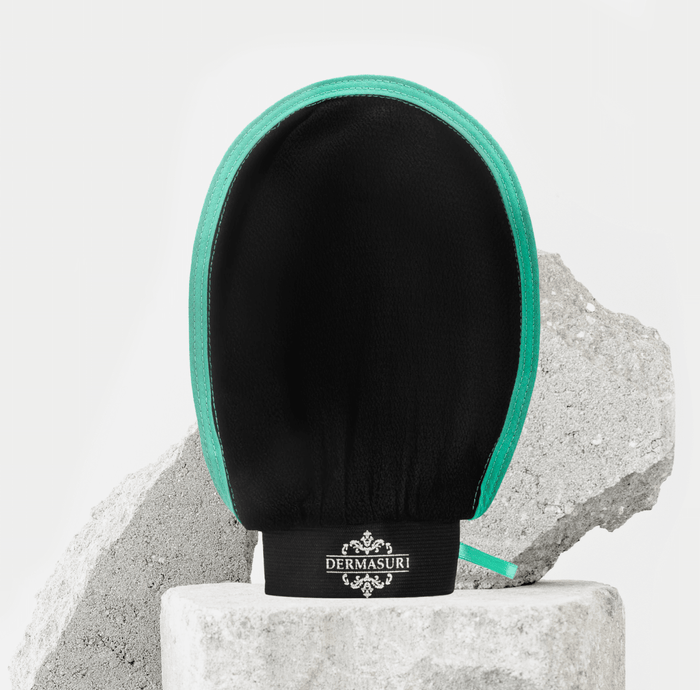
After sun exposure, your skin is more sensitive and delicate than usual. Harsh scrubs or aggressive exfoliation can cause further irritation, redness, and even damage the skin barrier. That’s why gentle exfoliation with a deep exfoliating glove from Dermasuri is the way to go. It gently clears away dead cells without stripping your skin of its natural moisture.
This approach protects your skin’s barrier, reduces dryness, and helps your skin feel comfortable and refreshed.
How to Exfoliate Gently After Sun
The key is to exfoliate just enough, not too often or too roughly. Aim to exfoliate about 1 to 2 times a week using mild products designed for sensitive skin. Whether you choose a gentle physical exfoliant like Dermasuri’s exfoliating mitts or sugar scrubs, or a mild chemical exfoliant, always use light pressure and avoid scrubbing hard.
After exfoliating, follow up with hydrating and soothing skincare, such as moisturizers with ceramides, aloe, or antioxidants, to lock in moisture and calm your skin.
Here is a simple after-sun routine with a Dermasuri glove or mitt:
- Wait until your skin is calm, with no redness, heat, or peeling left.
- Soak in the shower or bath for a few minutes first. Damp, softened skin lets dead cells come away more easily.
- Use water only. Soap or body wash before exfoliating makes your skin too slippery for the glove to grip, so wash afterward instead.
- Use light pressure in short strokes or small circles and let the glove do the work. You are buffing, not scrubbing.
- Apply moisturizer right after you exfoliate to put back the moisture it can take with it.
- Exfoliate in the evening when you can, so your fresh skin has the night to settle before it sees the sun again.
If your skin turns red, feels tight, or stings after exfoliating, you are doing too much. Ease off on pressure and frequency until it feels normal again. If your skin tends to react easily, our guide to exfoliating sensitive skin has more on going gently.
Other Skincare Tips After Sun Exposure
Remember to keep hydrated by drinking plenty of water, avoid further sun exposure while your skin heals, and always use sunscreen daily, especially after exfoliating. If your skin feels severely burned or damaged, consider seeing a dermatologist for professional care.
Why sunscreen matters after you exfoliate
Freshly exfoliated skin is more open to UV damage and can burn more easily, so sun protection matters most in the days right after you exfoliate.
Acid exfoliants are one example. The FDA notes that alpha hydroxy acids (AHAs) can increase your skin’s sensitivity to the sun and the chance of sunburn. It advises using sunscreen, wearing protective clothing, and limiting sun exposure while you use them and for a week afterward.
The best way to protect freshly exfoliated skin from sun damage is to plan around it. Exfoliate in the evening, then apply a broad-spectrum, water-resistant sunscreen with SPF 30 or higher the next morning and keep the area covered or in the shade when you can.
For how exfoliating affects the way sunscreen goes on, see our post on exfoliating before sunscreen.
Maximize the Benefits of Your After-Sun Skincare Routine With Dermasuri
Gentle exfoliation is an important step in after-sun skincare, helping your skin stay healthy and glow once it has recovered. To get the best results from your after-sun skincare routine, make sure you have the right partner, like Dermasuri exfoliating gloves and scrubs.
Using Dermasuri after sun exposure helps restore your skin’s natural glow without irritation. Our deep exfoliating scrub gloves and mitts instantly remove dry, flaky skin and leave your skin soft and smooth.
Unlike harsh scrubs, Dermasuri gloves and mitts work with just water and simple massaging, making them a good fit for sun-exposed, sensitive skin once it has healed.
Browse our shop today and try our gentle exfoliating products to refresh your skin and reveal your best after-sun glow.